
How a Master Key System Improves Commercial Facility Security
Key Control is essential for protecting your assets in the facility and digital assets. Here's how a master key system ...
Read More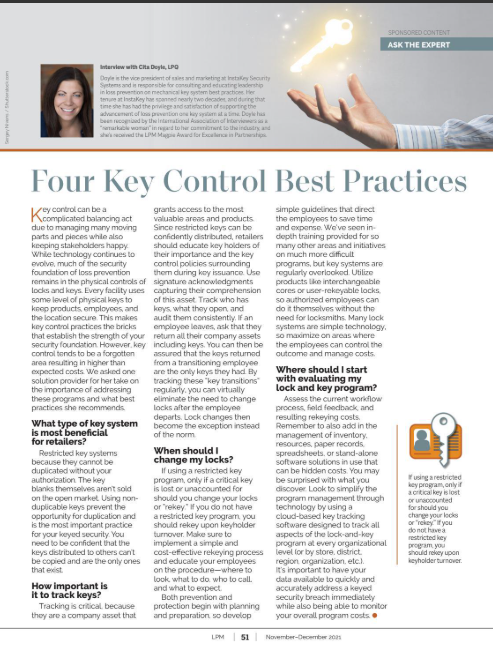 Download Article
Physical security programs are only as strong as the key control processes that support them. While electronic access continues to expand across many industries, mechanical keys remain the primary method of securing offices, stores, multifamily properties, maintenance areas, and other critical spaces. Without consistent key management practices, organizations increase the risk of unauthorized access, unnecessary rekeying costs, and lost accountability.
In the Loss Prevention Magazine Ask the Expert feature, Four Key Control Best Practices, InstaKey's Cita Doyle outlines the foundational practices every organization should implement to build a more secure and efficient key control program. Rather than relying on reactive lock changes after a security incident, organizations can reduce risk by establishing clear policies for key issuance, accountability, and ongoing management. These best practices create a stronger foundation for physical security while helping reduce operational costs over time.
The article begins by emphasizing the importance of using restricted key systems whenever possible. Unlike conventional keys that can often be duplicated at local hardware stores or self-service kiosks, restricted keys provide greater control by limiting unauthorized duplication. This helps organizations maintain confidence that only approved personnel possess working keys and significantly reduces one of the most common vulnerabilities in traditional key systems.
The second recommendation focuses on tracking every key as a company asset. Keys should not simply be handed out and forgotten. Instead, organizations should maintain accurate records showing which employee has each key, require signed acknowledgments during issuance, and routinely verify that records remain current. Treating keys like any other valuable business asset increases accountability and simplifies audits when personnel changes occur.
Another important best practice is developing a clear process for determining when locks should be changed or rekeyed. The article explains that organizations should have documented procedures for responding to lost, stolen, or unreturned keys. By planning ahead, businesses can respond quickly without confusion or unnecessary delays. Equally important is educating employees about these procedures so everyone understands their role in maintaining physical security.
Finally, the article recommends regularly evaluating your overall key control program. Organizations should assess current workflows, identify gaps in accountability, and determine whether manual tracking methods continue to meet operational needs. As organizations grow or manage multiple locations, digital key tracking solutions can improve visibility, simplify reporting, and reduce administrative effort by maintaining accurate records of key assignments and activity.
Together, these four best practices create a proactive approach to physical security that extends well beyond the locks themselves. Restricted keys help prevent unauthorized duplication, documented tracking improves accountability, planned rekeying procedures reduce operational disruption, and routine program evaluations ensure policies continue to support changing business needs.
Whether managing retail stores, public housing communities, healthcare facilities, restaurants, or other multi-site operations, organizations that consistently apply these principles are better positioned to protect assets, reduce rekeying expenses, and maintain confidence in who has access to their facilities.
To learn more about these foundational recommendations, read the complete Loss Prevention Magazine Ask the Expert feature, Four Key Control Best Practices, which provides additional guidance for building a stronger and more effective physical key management program.
